Raw Feeding Service

WE OFFER A RAW FEEDING SERVICES

We understand that some people like the idea of raw feeding their dog but aren’t too keen coming into contact with the product.

Let us take the hard work out of it for you by making up daily meals for you to feed to your dog. We will tailor make each meal to your dog's exact requirements. We will consult with you to see if your dog has any intolerances, likes/dislikes, etc and will provide you with a daily nutritionally balanced meal ideal for your dogs breed and weight.  Your order can be picked up while your dog is in dog day care or you can make an arrangement to pop in and pick up your order.

We can provide meals either in plastic food bags or, reusable plastic containers that can be returned to us for  your next order.
Chilled Dawgz Dog Day Care Glasgow Dog Accessories

WHAT WE WILL ALSO BE STOCKING AT THE CENTRE

We will also be holding a range of raw food for you to purchase directly from the centre to make up at home.

As well as all this we will be stocking a wide range of dog accessories from our fantastic Bowed Over pet accessory partner, so we really are your one stop for all your dog needs.

10 SIMPLE RULES TO RAW FEEDING

Rule # 1: The Raw Dog Food Diet Must Have Calcium
Dogs, and especially puppies, need a solid source of minerals, especially calcium and phosphorus. Your dog wouldn’t survive without them.
To get enough calcium and keep a healthy balance of minerals, your dog’s raw diet needs to contain about 12% to 15% bone.

If you feed your dog bones, you’ll mostly get the minerals right. The most important ones to worry about are calcium and phosphorus. Both dogs and growing puppies need enough calcium in their diet. And they need some phosphorus to go with it because these minerals work closely together. Bones contain both calcium and phosphorus.

On the other hand, meat is high in phosphorus and too low in calcium. An all-meat diet will certainly cause bone and nervous system issues in your dog and severe bone issues in growing puppies. So you need bone in the diet …
To get enough calcium and keep a healthy balance of minerals, your dog’s raw diet needs to contain about 10% bone. To make things simpler, this means about 1/3 of his diet should be nice meaty bones.Here are some good choices for meaty bones:
• Chicken wings, necks, legs or thighs
• Turkey necks (other bones are large)
• Beef tail bones (great for larger dogs)
• Lamb or goat necks or ribs

You can also feed your dog whole animals such as whole fish, whole rabbit and whole poultry. These contain just the right amount of bone. Raw eggs with the shell on also contain the right ratio of calcium and phosphorus.


Rule #2: Organs Are The Multi-Vitamins

I think the number two mistake raw feeders make with a raw dog food diet (I’ll talk about the #1 mistake soon) is not feeding enough organs. Organs are the nutrient-rich parts of the animal and without them, your dog could be missing some important vitamins.

Overall, you’ll want to feed anywhere from 10% to 30% organ meats. But this depends on how much you can get. If you can only find liver, just feed 10% organs. If you’re lucky and you can find kidney, spleen, pancreas, brain and other delicious, nutritious organs, then feed them as a third of your dog’s diet. But never feed that much liver … limit it to 10% because it’s really high in vitamin A and can give your dog some messy diarrhea if you give too much. The same applies to any organ … no one organ should be more than 5% to 10% of your dog’s diet, but if you have a few different ones, they can be 1/3 of your dog’s total meals.


Organs would include:
• Liver
• Kidney
• Spleen
• Pancreas*
• Thymus*
• Brain
• Lung
• Testicles
* Pancreas and thymus are both sold under the name sweetbreads.

Just go easy on the organ meat at first because it can cause loose stools until your dog is used to it. If your dog doesn’t like the taste at first, try frying it for a minute or so first.

Rule #3: Muscle Meat Is The Foundation

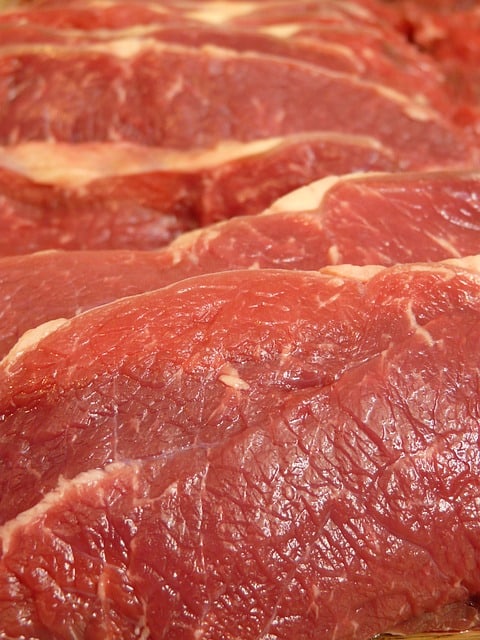
Once you get your meaty bones and organs in place, the rest of your dog’s diet should be nice lean meats. That means half to a third of his total food, depending on how much organ meat you can get your hands on. These are the protein-rich component of your dog’s diet and he needs proteins to build strong tissues, as well as the hormones and enzymes he needs to survive and thrive.

Good choices for muscle meat include:

• Beef (ground beef, cheek meat, stewing beef)
• Beef heart (but not more than 5% of the diet as it’s very rich)
• Bison (ground bison, stewing bison meat)
• Turkey (ground turkey, boneless thighs, breast meat, tenderloin)
• Lamb (stewing lamb, ground lamb, shoulder or breast meat)
• Pork (pork shoulder or butt, cushion meat, boneless rib meat, loin)
• Chicken (boneless thighs, breast meat)


Rule #4: Watch The Fat

If your dog’s diet is too high in fat, I guarantee he won’t be getting enough vitamins and minerals.

Fat is healthy for your dog … it helps with nerve and immune function and is critical for skin health. But fat carries a downside … fat contains twice the number of calories as protein and it contains very few vitamins and minerals.

Remember I said I’d mention the #1 mistake when it comes to raw diets? It’s feeding too much fat. If your dog’s diet is too high in fat, I guarantee he won’t be getting enough vitamins and minerals. The calories from the vitamin and mineral deficient fat will add up before your dog gets enough and you might start to see some long-term health issues if the fat is too high.

Overall, you don’t want fat to be much more than 10% and certainly no more than 20% of the diet. This doesn’t mean no fat! Your dog needs fat, but just not so much of it that it robs him of other important nutrients.

Rule #5: Don’t Get Hung Up On Fruit and Veg

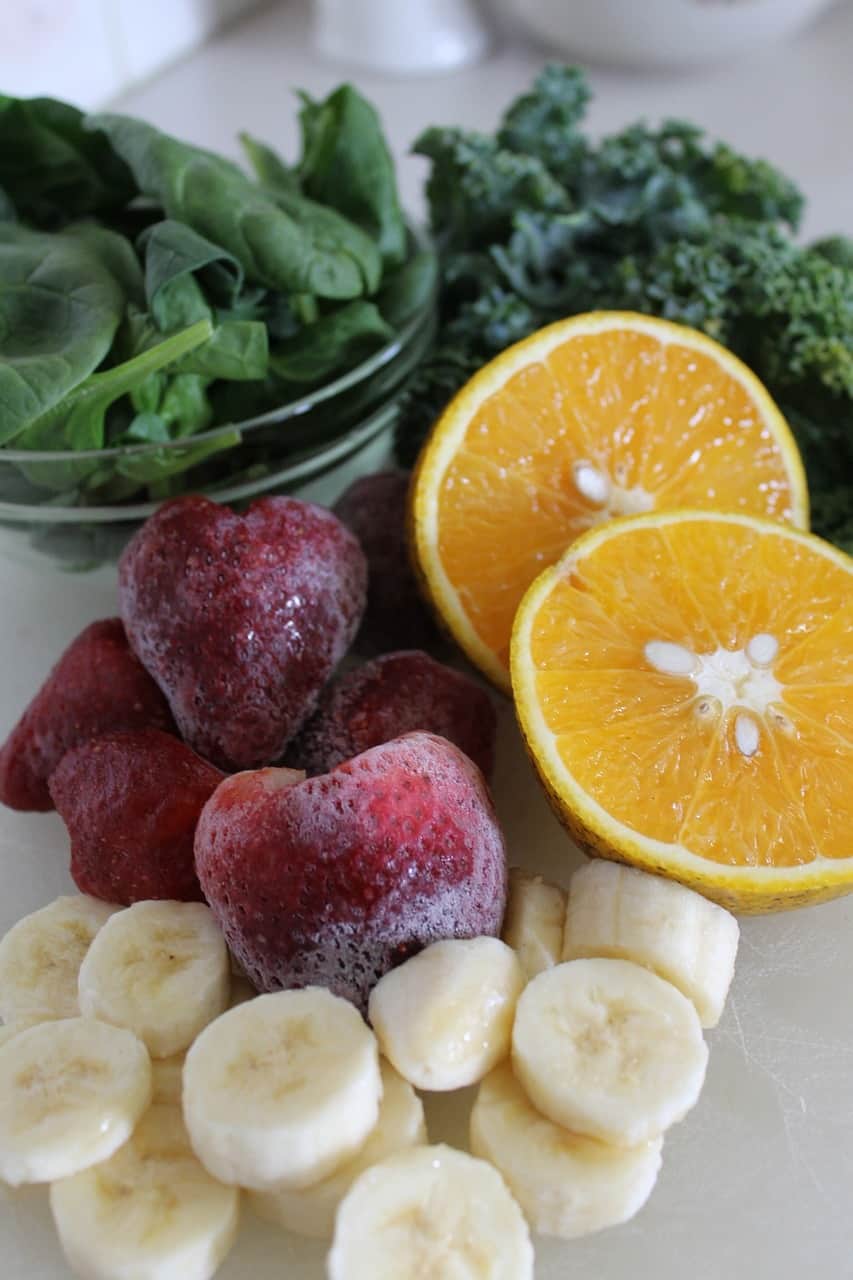
Should you add fruits and vegetables to your dog’s raw diet? The short answer is it’s really up to you. If you stick to the first four rules, your dog will get a nicely balanced raw diet with enough vitamins and minerals to do well.


Fruits and vegetables carry some unique benefits your dog can’t get from animal products. And in the wild, your dog’s ancestors ate a reasonable amount of grasses and berries … and I like to think that they ate them for a reason (because animals are very good at sourcing out the foods their bodies need).

What benefits do fruits and vegetables offer that can’t be found in meat?

Prebiotics (fiber) are indigestible plant fibers that feed important little bugs that live in your dog’s gut (called probiotics).
Chlorphyll is the green pigment in plants that makes your dog’s cells healthy detoxifies his liver and digestive system. It can also protect against cancer.
Carotenoids are important antioxidants that protect your dog from ageing and disease. Carotenoids are found in yellow, orange and red colored fruits and vegetables like squash, carrots, papaya, cantaloupe.
Lycopene is another powerful antioxidant that can play a role in preventing and slowing cancer. Lycopene gives many vegetables their red color and it’s found in tomatoes, carrots, red cabbage, watermelon.
Lutein is another antioxidant that’s known to protect the eyes, skin and heart. It’s found in dark leafy greens and in yellow plants, including kale, broccoli, oranges and papaya.
Flavonoids or bioflavonoids can regulate cell signaling and have antioxidant, anti-inflammatory and anti-cancer properties. In general, the more colorful the plant food, the higher it is in bioflavonoids.

I would advise either steaming or blending them for your dog to get the most out of them.


Chilled Dawgz Dog Day Care Glasgow Fruit & Veg
Chilled Dawgz Dog Day Care Glasgow Starch

Rule #6: Keep It Starch-Free

Starchy foods like grains, peas and potatoes aren’t suitable for your dog (or for you for that matter). Dogs do have the ability to digest some grain content and it might not be too harmful to include a small amount of grains in training treats … but try as much as possible to limit their use.

Starchy foods cause your dog to continually produce a hormone called insulin. This causes him to store a lot of his food as fat, so if your dog is on the chubby side, avoiding grains will help. This can also lead to insulin resistance and diabetes.

But the biggest reason to ditch the starch is because it only adds calories to your dog’s diet. While your dog would die without protein or fat, he has no need for starch (or carbohydrate). And eating too much can start to disrupt the delicate colonies of microbes that live in his digestive tract. These little bugs make up most of your dog’s immune system and even help him produce vitamins … and when they’re disrupted, your dog can suffer from allergies, yeast and inflammatory health issues.

In a nutshell, if your dog doesn’t need them, why would you feed them? There’s no benefit to starch and the risks outweigh the benefits (and the only benefit to starch is it keeps costs down for you … they add no benefit to your dog whatsoever).

Most of the healthy benefits of the raw diet aren’t necessarily because it’s raw … it’s because every other diet is high in starch! Don’t overlook the importance of cutting that starch out of your dog’s life … this is the main reason people see so many healthy changes when they switch their dog to a raw diet.

Rule #7: Variety Counts

Just like us, dogs need a variety of wholesome foods to provide them with a wide range of nutrients … not to mention the fact that it’s boring to eat the same foods every day!

Feed a wide variety of different foods, including different sources of meat. Don’t forget to feed some of the “weird and icky things” such as chicken, duck or turkey feet, beef trachea, tails, lung, testicles and pizzles. Parts like beef trachea and poultry feet are loaded with natural chondroitin and glucosamine, which help to build healthy joints and they’re reasonably priced. Adding the icky parts is a win-win.


Rule #8: Balance Over Time

One common concern with raw feeding is that it’s not “complete and balanced.” This isn’t true for two reasons.

First, nobody knows what complete and balanced is, so it’s difficult to make this claim.

Second, balance can occur over time … every meal doesn’t need to be completely balanced. As long as your dog’s nutritional needs are met over the course of a few days or weeks, you’re good.

You don’t calculate the exact percentages of protein and carbohydrates or the exact amount of vitamins and minerals in each of your family’s meals. You don’t have to do it with your dog’s meals either. So, you don’t have to follow these rules for every meal.

Rule #9: Feed Fish Once A Week

You can feed whole fish (like sardines, smelts, herring, mackerel) once or twice a week. Or you can add a little fish to several meals. At the end of the week, you’ll want whole fish to be about 5% of your dog’s total diet. This will balance out his fats.


Rule # 10: Relax

If you follow rules 1 through 9, you’ll be feeding your dog a fresh, whole food diet that’s safe and balanced. It really is that easy to feed raw. The only step left is to start doing it! But before you do, here are just a couple of things to keep in mind …
When To Feed
Most people feed their dogs twice per day. 


How Much To Feed
As a starting point, feed your dog about two to three percent of his ideal adult weight. If your dog is very active, you may need to feed a little more and if your dog is more of a couch potato, you may need to feed a little less.

The best way to tell if you’re feeding the right amount is to run your hands over your dog’s ribs. If you can feel the ribs, but not see them, your dog is at a good weight.

Puppies need more calories and nutrition … so they should also receive about two to three percent of their ideal adult weight. When puppies are four to six months old, they will need a lot of food and a good amount of calcium because they’re building their adult teeth. If they don’t get enough calcium in their diet at this critical stage, they’ll pull the calcium from their bones and either develop bone or dental deformities. So, throw a few extra bones at your puppies at this age, just for a little extra insurance.

With time, you will become more comfortable with your dog’s new diet and you will start to see the results in the form of better coats, cleaner teeth, fresher breath and fewer health issues.

Good luck with your dog’s diet. Feel confident that when you feed your last bag of kibble, you’ll be joining the ranks of thousands of people who have safely and effectively made the jump to raw feeding and have never looked back!

What Our Customers Say

Leave Us A Google Review
linkedin facebook pinterest youtube rss twitter instagram facebook-blank rss-blank linkedin-blank pinterest youtube twitter instagram