Rule #5: Don’t Get Hung Up On Fruit and Veg
Should you add fruits and vegetables to your dog’s raw diet? The short answer is it’s really up to you. If you stick to the first four rules, your dog will get a nicely balanced raw diet with enough vitamins and minerals to do well.
Fruits and vegetables carry some unique benefits your dog can’t get from animal products. And in the wild, your dog’s ancestors ate a reasonable amount of grasses and berries … and I like to think that they ate them for a reason (because animals are very good at sourcing out the foods their bodies need).
What benefits do fruits and vegetables offer that can’t be found in meat?
Prebiotics (fiber) are indigestible plant fibers that feed important little bugs that live in your dog’s gut (called probiotics).
Chlorphyll is the green pigment in plants that makes your dog’s cells healthy detoxifies his liver and digestive system. It can also protect against cancer.
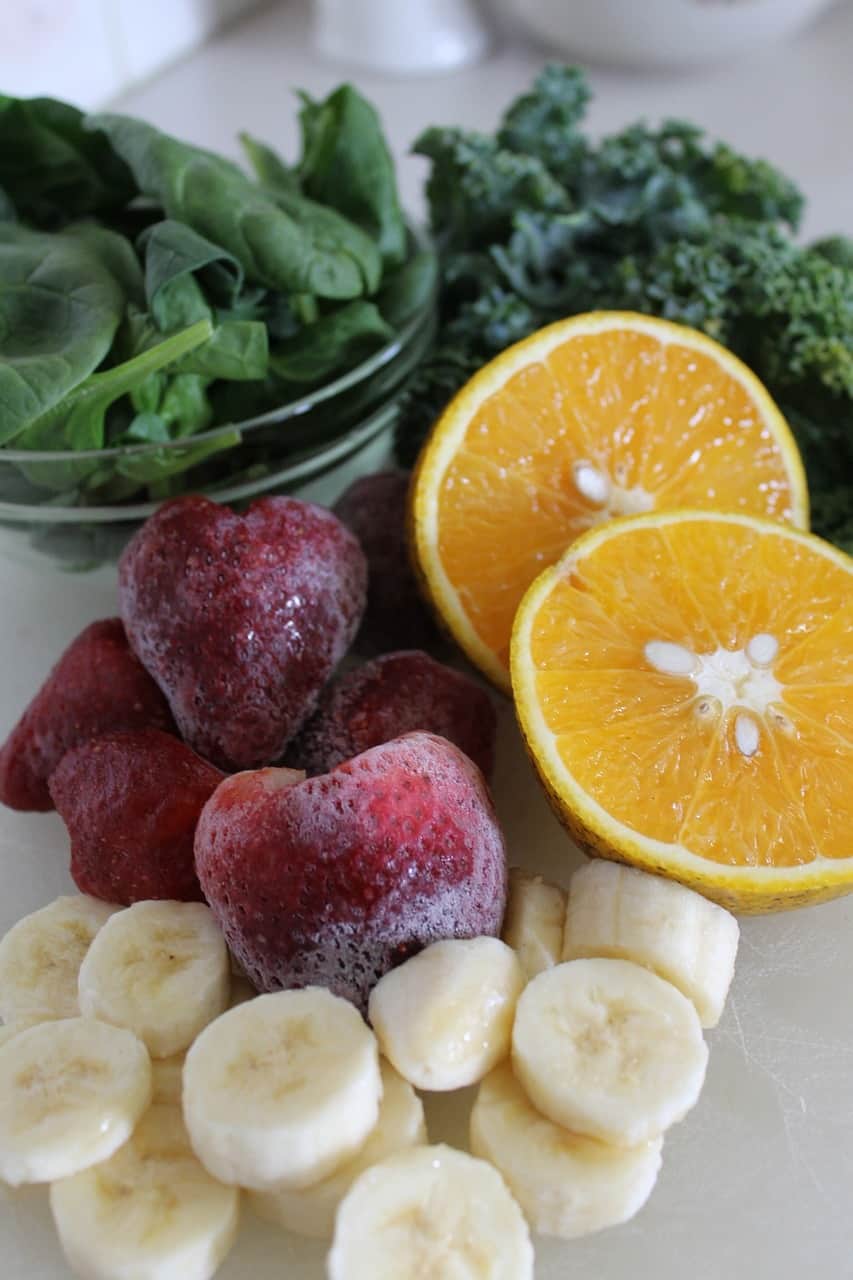
Carotenoids are important antioxidants that protect your dog from ageing and disease. Carotenoids are found in yellow, orange and red colored fruits and vegetables like squash, carrots, papaya, cantaloupe.
Lycopene is another powerful antioxidant that can play a role in preventing and slowing cancer. Lycopene gives many vegetables their red color and it’s found in tomatoes, carrots, red cabbage, watermelon.
Lutein is another antioxidant that’s known to protect the eyes, skin and heart. It’s found in dark leafy greens and in yellow plants, including kale, broccoli, oranges and papaya.
Flavonoids or bioflavonoids can regulate cell signaling and have antioxidant, anti-inflammatory and anti-cancer properties. In general, the more colorful the plant food, the higher it is in bioflavonoids.
I would advise either steaming or blending them for your dog to get the most out of them.